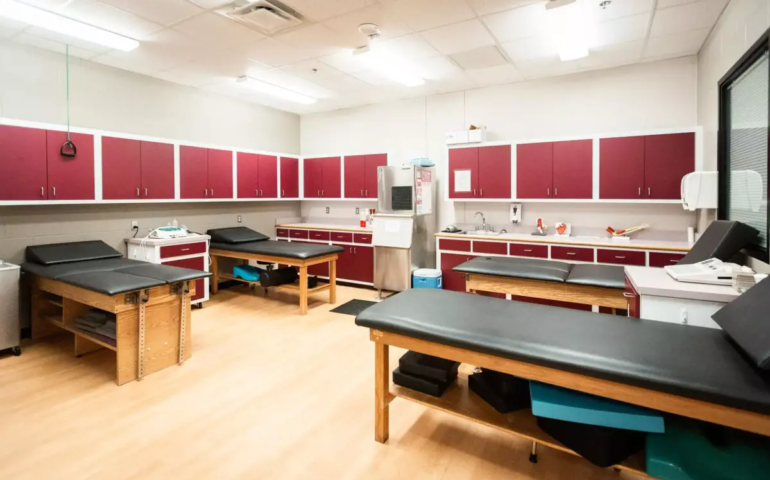
For most SNU students, an athletic trainer is someone they see on the sidelines during a game or inside the athletic training clinic helping an injured athlete. However, there is much more to the job than what happens in front of spectators. With more than 700 student-athletes competing in SNU’s varsity and NCAA-sponsored sports, the school’s athletic trainers have a large responsibility in keeping athletes healthy and helping them return to competition.
Travis Veatch, an Edmond native, has spent 26 years as a certified athletic trainer and recently completed his 25th year at SNU. Veatch earned his undergraduate degree from SNU in 1998 and later received a master’s degree in business administration from SNU with an emphasis in healthcare. Outside of work, Veatch is married to his wife, Ellen, and has two children: Ivy, 14, and Braxton, 17.
Currently, SNU’s sports medicine staff consists of five full-time athletic trainers, with Veatch working to fill another open position. With hundreds of athletes relying on a small team, staying ahead of the workload can be challenging.
“It can be a challenge some days, keeping up with the number of athletes we serve on a daily basis,” Veatch said.
To manage the high volume, the sports medicine staff introduced new ways to organize their time and limited clinic space. One major adjustment requires athletes to schedule appointments during clinic hours if they need extended treatment or rehabilitation. The staff also prioritizes sports that are currently in season.
“These little adjustments have really helped us manage our large athlete numbers better,” he explained.
Even with these changes, the training clinic remains busy. On an average day, Veatch estimates that between 30 and 50 athletes come through the athletic training clinic.
With so many athletes coming through the clinic, dealing with injuries is a daily reality. Veatch said ankle sprains are the most common injury the staff treats, followed by knee injuries and shoulder injuries. Because SNU has so many athletes competing in different sports, the trainers must be prepared to treat a wide variety of injuries throughout the year.
While fans may see trainers treating athletes during a game or practice, much of their workload takes place out of sight. Veatch explained that there are many responsibilities that students and spectators may never see.
“We have to take injury and rehabilitation notes, develop rehab programs, and communicate injuries with coaches on a daily basis,” Veatch stated.
Trainers also schedule physician appointments, consult with team doctors, and handle insurance claims, billing and paperwork. These responsibilities add another layer to a job that already requires the staff to work that already requires constant hand-on patient care.
After 26 years in athletic training, Veatch has learned that being successful in the profession requires more than medical knowledge. Balance, organization, problem-solving and communication are all essential skills for any athletic trainer.
Veatch particularly emphasized communication. Athletic trainers must explain injuries and recovery plans in a way that builds trust with student-athletes while also keeping coaching staff informed.
“You must be able to communicate well with athletes about their injuries in order for them to gain your trust and believe that you have their best interest in mind,” he commented.
For Veatch, the job is not simply about helping an athlete get back on the field. It is about working with athletes through some of their most difficult moments, solving problems, and ensuring they receive the care they need.
After 25 years at SNU, Veatch continues to be a key part of the team behind the teams. While fans focus on the scoreboard, the athletic training staff works behind the scenes every day to make those athletic performances possible.
Photo provided by: Southern Nazarene Athletics