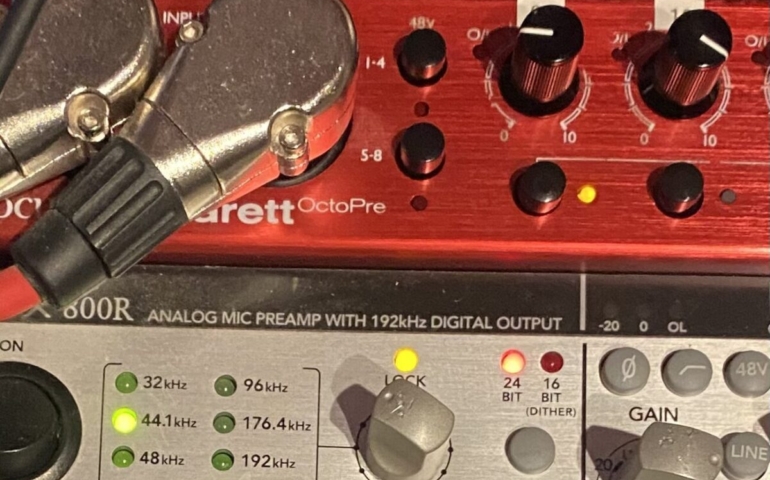
Over the years, SNU’s campus has seen many changes and renovations across its academic buildings. Yet few spaces match the atmosphere and technology of the state-of-the-art recording studio housed inside the Fine Arts Building.
In operation since 2005, the studio features two control rooms and six isolation rooms where students can log hours tracking everything from solo instruments all the way up to full student ensembles. Commercial music production majors and students in related fields receive hands-on access in the studio, learning how to operate professional equipment both correctly and efficiently.
The idea for the recording studio was conceived by Professor Ken Rosfeld, who serves as the director of commercial music production. He designed, equipped, and maintains the facility while continuing to work professionally recording commercial projects. He talked about where the idea for a studio on campus came from.
“I had owned a recording business with a business partner and was doing just fine,” Rosfeld said. “But I didn’t really feel that I was impacting the lives of others in a meaningful way. Both my parents were college professors, and I always appreciated the interaction that they had with students,” he continued. “I wanted to do something similar but focused on the field of audio production.”
Rosfeld teaches all of the commercial music production majors, and talked about how the studio is set up in a way that everyone can easily understand how it functions.
“The design of the studio allows a modular approach to each project, with each new module bringing in more advanced features and possibilities,” he stated. “However, once a student learns how to get everything turned on, it’s pretty easy to start with the basics and grow from there.”
Since opening its doors, the studio has hosted numerous musicians, including regional Christian music veteran Sherman Andrus.
. The studio’s rise also coincided with the audio’s industry’s massive shift from analog tape to digital recording software during the 2000s. The official switch happened June 12, 2009, when all full-power TV stations turned off their analog signals. Rosfeld recalled how he handled that switch in the studio.
“It became much more affordable and made it very difficult for some professional recording studios to compete with the large number of home studios that had popped up,” he said. “The ones that did survive learned how to specialize and offer services that were not easily available to the home musician, such as better recording spaces, more experienced engineers, and equipment that was not easily available to everyone.”
Two decades later, SNU’s recording studio continues to serve as an anchor for aspiring audio engineers, with Rosfeld guiding the next generation of producers, engineers, and composers.
Photo by: Jack Perrett